

The Wayang Office Plaza, 5th Floor
Jl. Kedondong No. 5A, RT.11/RW.9
Rawamangun, Pulo Gadung
East Jakarta, DKI Jakarta 13220
Indonesia

Telp: +6221 388-590-01
WhatsApp: +62 899-3300-033
WhatsApp SNI: +62 857-7042-1713

Opening : Mon – Fri, 8:00 – 16:00

SDPPI Certification Agency, Type Approval and SNI Certfication Agency by PT. Cerapproval
Category: DJID
-
Requirements and Process for POSTEL Certification in Indonesia
POSTEL Certification is a mandatory regulatory requirement for telecommunication devices marketed in Indonesia. Products such as mobile phones, routers, modems, IoT devices, and radio communication equipment must obtain POSTEL approval before entering the Indonesian market. Many manufacturers and importers face challenges due to complex regulations, technical documentation, and frequent updates. This article provides a comprehensive…
-
Postel DJID Certification for MiFi Modems in Indonesia
As digital connectivity continues to grow, Modem MiFi (Mobile WiFi) devices have become essential tools for both personal and business use. However, before a MiFi modem can be legally marketed and distributed in Indonesia, it must comply with national regulations, including obtaining Postel DJID Certification. This certification is issued by the Directorate General of Digital…
-
What Is a Wireless Microphone Transmitter? How to Use It and DJID Postel Certification Process in Indonesia
Wireless audio technology has become an essential part of modern communication and entertainment industries. One of the most widely used devices is the wireless microphone transmitter, commonly found in broadcasting, live events, education, and religious venues. However, in Indonesia, these devices are regulated and must obtain DJID Postel Certification before being marketed or used commercially.…
-
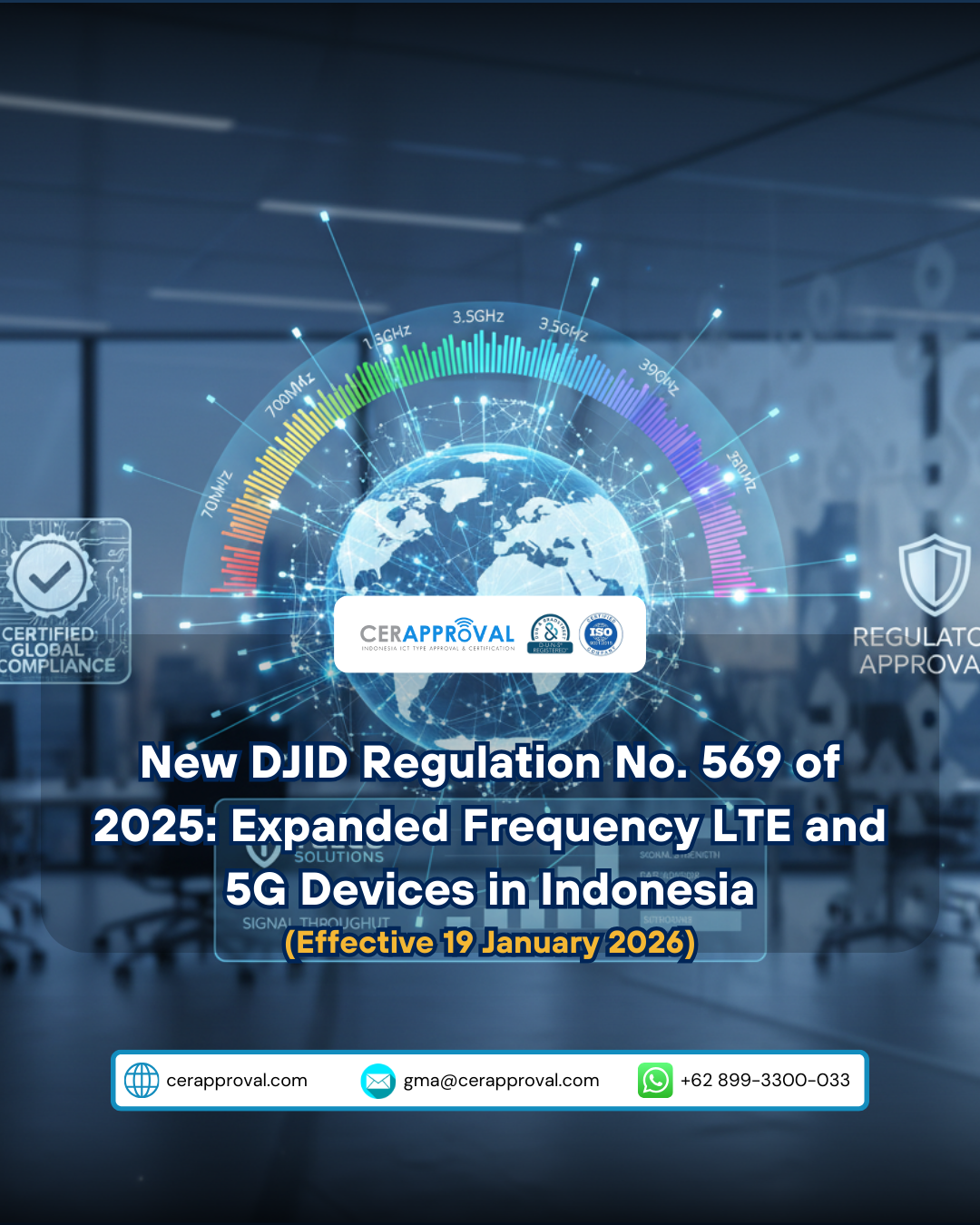
New DJID Regulation No. 569 of 2025: Expanded Frequency Bands and Bandwidth for LTE and 5G Devices in Indonesia
The Government of Indonesia, through the Ministry of Communication and Digital Affairs (Komdigi), has officially issued DJID Regulation No. 569 of 2025 as the latest technical standard for 4G LTE and 5G NR telecommunication devices. This regulation replaces the previous DJID Regulation No. 352 and will come into effect on January 19, 2026. This regulatory…
-
DJID Certification for Smart Projector Devices in Indonesia: A Complete Compliance Guide
As smart visual technology continues to evolve, smart projectors are increasingly used across education, corporate environments, and home entertainment. However, before any smart projector device can be legally marketed in Indonesia, it must comply with mandatory regulations, including DJID Certification issued by the Directorate General of Digital Infrastructure (Komdigi). DJID certification ensures that telecommunication-enabled devices…
-
Understanding Wireless Earbuds and Postel Certification Process in Indonesia
Wireless earbuds have rapidly become one of the most popular consumer electronic devices worldwide, including in Indonesia. Utilizing Bluetooth wireless technology, these devices fall under the category of telecommunications equipment. Therefore, before being distributed or sold in Indonesia, wireless earbuds must obtain Postel Certification (SDPPI Certification) issued by the Indonesian Ministry of Communication and Digital…
-
Postel Certification for Cellular Telephone Devices in Indonesia
The Indonesian mobile device market continues to grow rapidly along with the advancement of digital communication technology. However, before a cellular telephone device (mobile phone) can be legally distributed in Indonesia, it must obtain Postel Certification from the Ministry of Communication and Digital. Postel Certification ensures that mobile devices comply with national technical standards, radio…
-
Postel Certification for Printer Machines in Indonesia
Printer machines have evolved beyond simple printing devices. Today’s printers are equipped with advanced wireless communication features such as WiFi, Bluetooth, and LAN connectivity. Due to these telecommunications capabilities, printer devices are classified as telecommunication equipment and therefore must obtain Postel Certification (DJID) before being sold or used legally in Indonesia. Postel certification is regulated…
-
Understanding Wireless Access Point Devices, How to Use Them, and the Postel Certification Process in Indonesia
The rapid growth of wireless networking technology has significantly increased the use of Wireless Access Points (WAPs) across residential, commercial, and industrial sectors. These devices enable stable and efficient wireless internet connectivity. However, in Indonesia, Wireless Access Points are categorized as telecommunication devices using radio frequency, making Postel (DJID) certification mandatory before they can be…
-
Postel Certification for Notebook Devices in Indonesia: Requirements, Process, and Expert Assistance
The rapid growth of digital transformation in Indonesia has significantly increased the demand for notebook devices across various sectors, including business, education, and personal use. However, before a notebook can be legally marketed or imported into Indonesia, it must comply with national regulations, particularly Postel Certification (SDPPI DJID). Postel Certification is mandatory for electronic devices…
Ready To Start New Project With Intrace?
Lorem ipsum dolor sit amet, consectetur adipiscing elit, sed do eiusmod tempor incididunt ut labore et dolore magna aliqua.